


imi Menopause Therapy
with clinical clarity and genuine understanding.

Find your ideal path through a new chapter of life with imi: mindfully, individually and with well-founded knowledge.
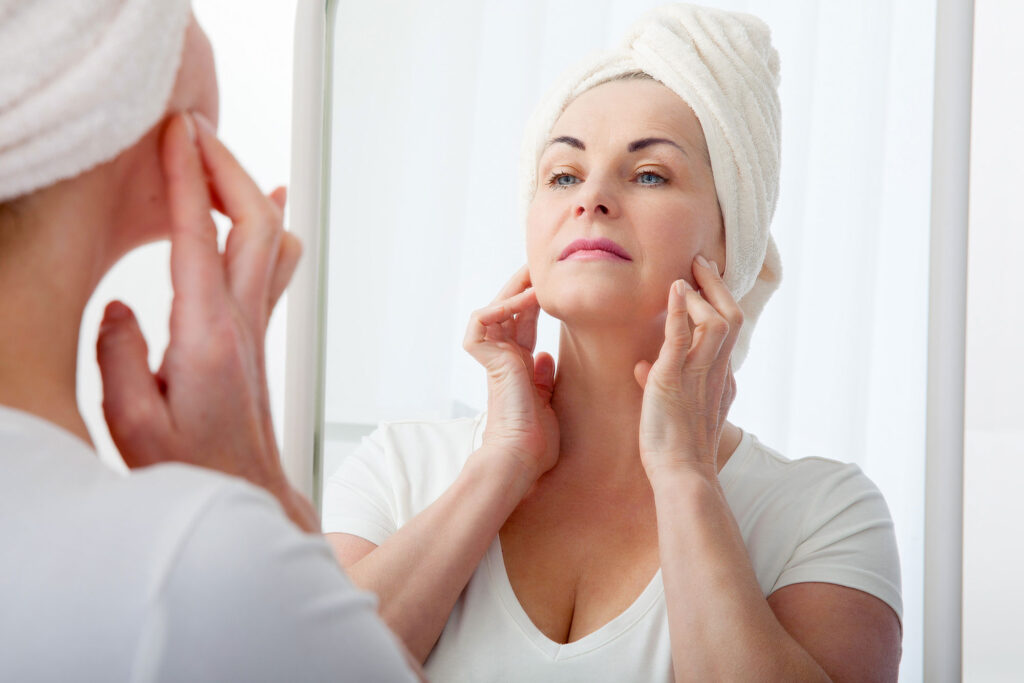
We are your personal partner during an important time of change.
The menopause is therefore, like every significant life transition, a chapter shaped by self-determination: you can make conscious, considered choices about how you navigate the hormonal changes involved — without compromising your quality of life. And those choices are best made with expert medical guidance and genuine human support — exactly what we offer at imi.
Many women find themselves wondering why their cycle has become irregular, or why they are experiencing unsettling hot flushes or sleep problems. Questions arise just as frequently about what health consequences and risks the menopause may bring, and how to approach this phase of life actively, healthily and with awareness.
At imi, we take the time to answer all of these questions thoroughly, to understand your personal situation in detail and to support your body in a holistic way. Because the menopause follows no fixed script — it is as unique as you are. Every woman experiences it in her own way, and we are here to help you make the most of yours: mindfully, individually and on a sound medical foundation.
The menopause: what happens in your body — and what you may notice.
Recognising the signs with precision. And addressing symptoms early and effectively.
During the menopause, there is a natural decline in female sex hormones — oestrogen and progesterone in particular. These hormonal shifts manifest differently in every woman and are experienced in highly individual ways. Some of the most common physical and emotional changes during this phase of life include:
- Irregular or absent periods
- Hot flushes and increased perspiration
- Sleep disturbances and fatigue
- Mood swings, anxiety or irritability
- Weight gain or changes in body composition
- Changes in libido
- Dryness of the skin and mucous membranes
- Difficulty concentrating
- Joint pain, as declining oestrogen levels can reduce fluid in the joints and promote inflammation
At imi, we take these symptoms seriously — and help you understand their causes and address them in a targeted way. Modern medicine today offers a wide range of effective options for relieving menopausal symptoms: from individually tailored hormone therapy using bioidentical preparations, through herbal and complementary approaches, to evidence-based lifestyle guidance.
Together, in a thorough personal consultation, we will identify the treatment options that are right for you — medically appropriate, optimally tolerated and carefully aligned with your personal circumstances.
Hormone replacement therapy (HRT) — applied individually and safely.
At imi, we therefore rely on personally tailored treatment concepts in which transdermal applications are preferred wherever possible, in the interest of minimising side effects — preparations in gel or cream form, for example, that are absorbed through the skin and are significantly gentler and lower in risk compared to oral administration via the gastrointestinal tract.
Hormone replacement therapy supports the body through the natural hormonal transition of the menopause by alleviating individual symptoms and thereby promoting both physical well-being and emotional equilibrium. At the same time, it represents a significant intervention in important bodily functions and should therefore, without exception, only be undertaken under specialist medical supervision.
For all treatment concepts that are appropriate for you, we provide comprehensive information about the various forms and options available, as well as the benefits, the potential risks and a treatment duration that is both sensible and as short as possible. Because your safety, your sense of physical well-being and your long-term health are, for us, the highest priority.
Bioidentical hormones — a forward-looking approach to menopause therapy.
Within the framework of modern approaches to hormone replacement therapy during the menopause, we rely — depending on the individual indication — not only on conventional hormonal preparations, but particularly on forward-looking bioidentical hormones.
Bioidentical hormones are compounds whose molecular structure is identical to that of the hormones naturally produced by the female body — oestrogen and progesterone, for example. Unlike many synthetic preparations, they are recognised and processed by the body with particular ease — which can improve tolerability and minimise side effects.
At imi, we use bioidentical hormones in a targeted way where they are medically appropriate — always at an individually determined dose, calibrated to your personal hormonal baseline and your symptoms. This allows the therapeutic effect to be precisely controlled while gently supporting the body’s natural equilibrium.
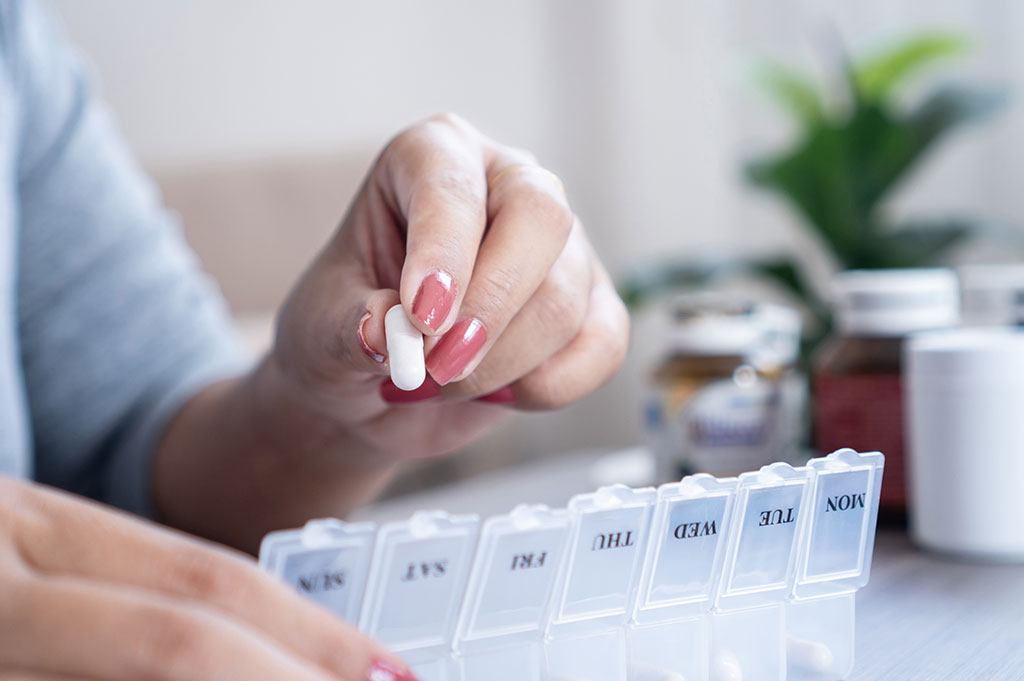
Expert accompaniment through every phase of the transition.
We take into account your hormonal baseline, any symptoms you are experiencing and your personal life circumstances — with the goal that you experience this new chapter with vitality and a genuine sense of well-being.
Together with you, we develop a holistic, personally tailored treatment concept that strengthens your physical sense of self and your inner balance — one that feels right in every respect.
In doing so, we create — on the basis of thorough diagnostics, clinical expertise and genuine attentiveness — a form of holistic menopause care that is not only medically effective but also sustainable in everyday life: for a better quality of life during a time of change. What we offer includes, among other things:
- Detailed hormonal status analysis using state-of-the-art diagnostics to establish your individual baseline
- Personal counselling on natural and pharmaceutical treatment options
- Individually tailored hormone therapy, using conventional or bioidentical preparations as appropriate
- Herbal and complementary medical approaches, e.g. phytotherapy
- Treatment of accompanying symptoms such as sleep disturbances, reduced libido, PMS, cycle changes or low mood
- Support with osteoporosis prevention, weight management or skin changes
- Holistic guidance on nutrition, exercise, lifestyle and stress management during the menopause — tailored specifically to your stage of life
- Emotional and psychological support when menopausal symptoms affect your mood
- Continuous monitoring and adjustment of your therapy whenever needed
We find the right path through the menopause — together with you.
The new phase of life that the menopause brings, and the wide range of treatment options available, can initially feel overwhelming for many women. You may be experiencing symptoms that are hard to identify or make sense of. You may have already tried treatments that did not have the desired effect. Or you may be looking for new approaches because your symptoms have changed or have so far gone unaddressed.
To reliably answer all of these questions, our first step at imi is a comprehensive initial assessment that captures your hormonal situation in detail and takes a broad, open view of your personal life circumstances. This in turn enables treatment options that are all the more precisely aligned with your individual needs — whether through conventional or bioidentical hormones, through herbal alternatives or through supportive measures for everyday life.

What patients say about imi
Your personal path to individualised menopause care.
Together with you, we develop a treatment strategy tailored precisely to you — evidence-based, carefully calibrated and as unique as you and your body.
At imi, we therefore see it as our task to provide you with clear orientation on the basis of thorough diagnosis and transparent communication.
Because during this particular phase, we want to do more than support you therapeutically — we want to accompany you holistically: with an open ear for your concerns, with clear guidance so that you can find your way confidently through the complex landscape of medical options, and with a treatment concept tailored specifically to you that is as effective as it is well-tolerated.
Because the imi philosophy is not simply about bringing the uncomfortable symptoms of the menopause under control. What matters to us, above all, is that you feel entirely at home in your body — stable, secure and in genuine harmony with yourself.
A step-by-step path to your personal treatment concept.
At imi, every treatment begins with a clearly structured approach: together, we capture your medical history, your goals and the demands of your everyday life, and translate this into a concrete treatment plan.
This plan is not a rigid programme but a dynamic instrument: we set measurable goals — such as sleep quality, frequency of hot flushes and energy levels — and establish clear review points.
This means you always know why a particular measure has been chosen, what it is intended to achieve and when adjustments are appropriate. This transparent, participatory approach creates confidence — and makes treatment decisions understandable and workable in practice.
Effective in the body — manageable in everyday life.
The result: a treatment optimally tailored to your needs — one that is medically precise in its effect and, at the same time, practical, low-burden and sustainably compatible with your daily life.
Our services for the menopause:
- Hormonal counselling and personalised therapy: from micronutrients (e.g. Menopearl) to individualised hormone replacement therapy (oestrogen, progesterone, testosterone, progestogen, e.g. using combination preparations such as Velbienne®)
- Regular ongoing monitoring and treatment adjustment
- Investigation of bleeding during or after the menopause; WID test for early detection of uterine cancer; (minimally invasive) surgical procedures such as thermal ablation / curettage
- Co-management of related symptoms (e.g. incontinence, prolapse complaints)
- Optional additional diagnostics such as ROMA score tumour marker screening or DHEA measurement for the diagnosis of hormonal disorders and adrenal conditions

Menopause care at imi: how does the assessment and treatment process work?
Step 1 – Initial consultation and baseline assessment
Goals of the initial consultation:
- Establishing the hormonal phase (perimenopause, menopause, postmenopause)
- Capturing all symptoms and changes in daily life
- Explaining the natural hormonal transition
In brief:
The perimenopause is the transitional phase preceding the final menstrual period. It is characterised by hormonal fluctuations with associated cycle changes, sleep disturbances or hot flushes. Menopause is reached when no period has occurred for 12 months.
In line with current guidelines, the diagnosis is usually made clinically; in cases of typical symptomatology, additional hormonal testing is frequently not strictly necessary.
Step 2 – Holistic symptom analysis
Typical topics:
- Hot flushes and night sweats
- Sleep quality and energy levels
- Mood, concentration and resilience
- Weight and metabolism
- Vaginal dryness, bladder or mucosal symptoms
- Libido and sexual function, which can change significantly as a result of hormonal shifts
Step 3 – Counselling on hormone therapy (MHT/HRT)
Potential benefits include:
- Marked improvement in vasomotor symptoms
- Stabilisation of sleep and overall well-being
- Improvement of urogenital symptoms
- Frequently positive effects on sexuality and quality of life
Step 4 – Treatment planning and forms of administration
Following the analysis, a personalised treatment plan is established:
- Selection of the appropriate hormonal combination (oestrogen ± progestogen)
- Preference for transdermal or local applications (gel, patch, drops, vaginal suppositories), as these are frequently more metabolically and cardiovascularly favourable
- Oral administration is reduced wherever possible
- Precise guidance and prescribing take place directly at imi
Step 5 – Extended treatment options
Phytohormonal approaches:
- Isoflavones (plant-based, oestrogen-like compounds)
- Black cohosh for vasomotor symptoms
Hormonal extensions:
- DHEA (a precursor to various sex hormones) for selected indications
- Low-dose androgenic applications for pronounced loss of libido or reduced energy
These options are assessed individually and applied in a targeted manner.
Step 6 – Monitoring schedule and progress
Treatment is accompanied in a structured way:
- First review after approximately 3 months (adjustment phase)
- Thereafter, typically 6-monthly intervals with gynaecological check-up
- Routine reviews can take place at imi or with the patient’s regular gynaecologist
Step 7 – Extended diagnostics (where indicated)
Depending on the course of treatment or findings, additional investigations may be appropriate:
- Hormonal status assessment in cases of unclear symptomatology
- Ultrasound monitoring
- Where ovarian assessment is limited, supplementary markers may be useful (e.g. ROMA index)
Step 8 – Dynamic treatment adjustment
As the hormonal situation changes over time, therapy is adjusted on a regular basis:
- Dose modification
- Adjustment of the form of administration
- Addition or reduction of individual treatment components
The goal is a long-term, stable and well-tolerated treatment — with the highest possible quality of life throughout perimenopause and menopause.
FAQs — Menopause therapy: answers that provide clarity.
Navigating the menopause with confidence: here we answer your most frequently asked questions about therapy and treatment during this new phase of life.
We explain how modern approaches such as individually tailored hormone replacement therapy, bioidentical preparations and complementary herbal measures work, what their benefits and risks are, and how you can develop a strategy step by step that is tailored to your individual needs.
The goal of this information is to give you confidence and a clear sense of direction. You will not only find out what is medically possible, but also how to make decisions that suit your lifestyle and support your quality of life. At imi, we combine clinical expertise with a genuine openness to your personal situation — so that you can experience the menopause well-informed, self-determined and with a real sense of inner strength.
- What exactly happens in the body during the menopause?
The menopause marks the end of the fertile phase of a woman’s life. Hormone levels — oestrogen and progesterone above all — gradually decline. This natural process can be accompanied by a range of physical and emotional changes, including cycle irregularities, hot flushes and mood swings.
What is important to understand: the menopause is not a deficiency — it is a biological transition. And one that can be very well supported.
- How do I know if I am entering the menopause?
The first signs usually appear during what is known as the perimenopause — the transitional phase before periods stop permanently. Typical early symptoms include irregular cycles, irritability, changes in libido and sleep disturbances. Later, hot flushes, difficulty concentrating and fatigue often follow. These can begin as early as the age of 40. Not every woman experiences all symptoms — this phase is different for everyone.
- Which hormones can become deficient during the menopause — and why does it matter?
Oestrogen, progesterone and, to a degree, testosterone are all produced in reduced quantities during the menopause. This affects many physical functions — including the mucous membranes, bones, skin, cardiovascular system, libido and emotional well-being. DHEA, cortisol and melatonin can also be disrupted. Precise analysis makes it possible to provide targeted support.
Beyond typical menopausal symptoms, declining hormone levels can also affect long-term health: the risk of osteoporosis, cardiovascular disease and skin changes may increase. Cognitive performance and emotional well-being are also frequently affected — but this does not mean the situation is without options.
- When is hormone replacement therapy (HRT) appropriate?
When symptoms are pronounced or significantly affecting quality of life, hormone replacement therapy can be highly effective. Many factors inform the decision:
- Your age and state of health
- Your individual risk factors
- Your personal goals
At imi, we take ample time for you, for a thorough diagnosis and for a treatment plan tailored precisely to you — so that we can make the right decision for your treatment strategy together.
- Which preparations are used in hormone replacement therapy?
There are many modern, individually dosable forms of administration: transdermal patches, creams or gels, vaginal suppositories or topical solutions. Oral preparations are used less frequently today, as absorption via the gastrointestinal tract carries a higher risk of side effects.
As part of your personal treatment plan and the accompanying consultations, we will advise you in detail on the various preparations available, their precise application and effects — and take care to ensure they can be integrated into your daily life simply, without complication and to full effect.
- Can hormone replacement therapy be dangerous or harmful?
The discussion around HRT was shaped for decades by the WHI study of 2004, which suggested, among other things, an increased risk of breast cancer and cardiovascular disease. However, more recent analyses, studies and follow-up observations present a considerably more nuanced picture, indicating that these risks are substantially lower than originally suggested.
The risk is therefore frequently overestimated. According to current evidence, the increase in risk associated with HRT is relatively modest — broadly comparable to that seen in women who consume a glass of wine daily. In the context of the menopause in particular, the benefits therefore clearly outweigh the risks.
Modern hormone therapy approaches using transdermal application and bioidentical hormones — as we prefer at imi — are today considered very safe, provided they are correctly dosed and medically supervised. With the right indication, the right type of treatment and an appropriate duration, the benefits convincingly outweigh the risks — particularly during the menopause.
- What are bioidentical hormones — and why are they preferred at imi?
Bioidentical hormones are hormones whose molecular structure is identical to that of the hormones naturally produced by the body — oestrogen, progesterone and testosterone, for example. Unlike many conventional synthetic preparations, they are recognised by the body as its own and can act in a particularly physiological way.
A significant advantage lies in their tolerability: because bioidentical hormones integrate seamlessly into natural metabolic processes, unwanted side effects are less common. They can also be dosed with great precision and flexibility — making finely calibrated, personalised therapy possible.
At imi, we prefer bioidentical hormones because they align particularly well with our commitment to modern, body-compatible and safe hormone replacement therapy. This allows us, together with you, to develop a treatment that is as gentle as it is effective — one that not only works, but also sits comfortably with your sense of self and integrates naturally into your daily life.
- For which women are bioidentical hormones suitable — and for whom are they not?
Bioidentical hormones are particularly well suited to women with typical menopausal symptoms who are looking for a well-tolerated, individually dosable therapy. They are ideal for early-onset symptoms, for women who react sensitively to conventional hormones, or where the most natural possible therapeutic approach is desired.
Bioidentical hormones are not recommended in certain circumstances — for example in cases of hormone-dependent malignancies, unexplained bleeding or specific vascular risk factors. At imi, we assess carefully whether bioidentical hormones are safe and appropriate for you — on the basis of your symptoms, your medical history and your current state of health.
- Are there alternatives to hormone replacement therapy?
Yes — alongside conventional HRT, a range of non-hormonal approaches is available today that can relieve menopausal symptoms in a gentle yet effective way. These include herbal preparations such as phytoestrogens (from soy or red clover, for example), which can exert hormone-like effects, and medicinal plants such as black cohosh, which have a well-established track record for hot flushes and mood swings.
Targeted micronutrient supplementation can also be beneficial — vitamin D for bone health, omega-3 fatty acids for cardiovascular and metabolic function, and magnesium for muscle and nerve regulation, for example. Lifestyle factors are equally important: regular exercise, a balanced diet, mindful stress management and good sleep have all been shown to have a positive influence on the course of the menopause.
At imi, we bring extensive clinical experience together with a holistic view of your health. This means we combine conventional therapies with integrative approaches where desired — always precisely matched to your physical needs, your life circumstances and your personal wishes.
- How long should hormone replacement therapy be continued?
Earlier guidance recommended a maximum of five years. Today, it is understood that the duration of therapy should be determined individually — depending on symptoms, risk profile and tolerability. Regular reviews (every 3–6 months) are important to allow timely adjustments.
Defining the right duration of therapy also requires a careful weighing of enhanced quality of life on the one hand against reliable medical safety and responsibility on the other. This balance is something we take very seriously at imi — and in it, your health always comes first.
- What is imi's philosophy regarding the menopause and its therapy?
At imi, we see the menopause as an entirely natural — yet deeply individual — process.
Our task is to accompany you with well-founded medical expertise, respect and genuine attentiveness: using bioidentical hormones as our preferred approach, alongside conventional hormone therapies where indicated, integrative concepts and one clear goal — for you to feel entirely at home in your body in the second half of life.

Your first step towards the child you are hoping for
Book your appointment now!

Use our easy online booking system — quick, straightforward and hassle-free.
